


LIMINA

About Us

Our Story

Limina Community Network is a grassroots nonprofit built on dignity, empowerment, and practical support. We connect people, mostly women and girls, newcomers, refugees, and anyone facing real barriers to safety or stability, with the resources, knowledge, and community they need to move forward.

Real change takes more than a one-time fix. Limina grew out of years of community work, refugee sponsorship, and simply listening to people who often had nowhere else to turn. That listening is still what shapes everything we build today.

Our Team

Freshta Zamani

Freshta Zamani

Founder & President

Freshta Zamani is an Afghan Canadian community leader, entrepreneur, and advocate from Kabul, Afghanistan. She came to Canada in 2007 as a teenage mother, building a new life with no established support system to lean on. That experience shaped everything that came after: a career defined by resilience and a lasting commitment to creating opportunities for others.

For more than a decade, she’s worked in community service, refugee sponsorship, settlement support, and women’s advocacy, while also running her own businesses in the beauty and furniture industries and organizing large community events. That mix of grassroots work and entrepreneurship gives her a practical, ground-level understanding of what actually shapes a person’s ability to move forward.

She holds a diploma in Social Services from George Brown College and is currently working toward a double major in Psychology and Sociology. Her education, business experience, and years in the community came together to shape Limina. Her own path, from new mother to entrepreneur to nonprofit founder, reflects the belief at the center of the organization: where you start shouldn’t decide how far you can go.
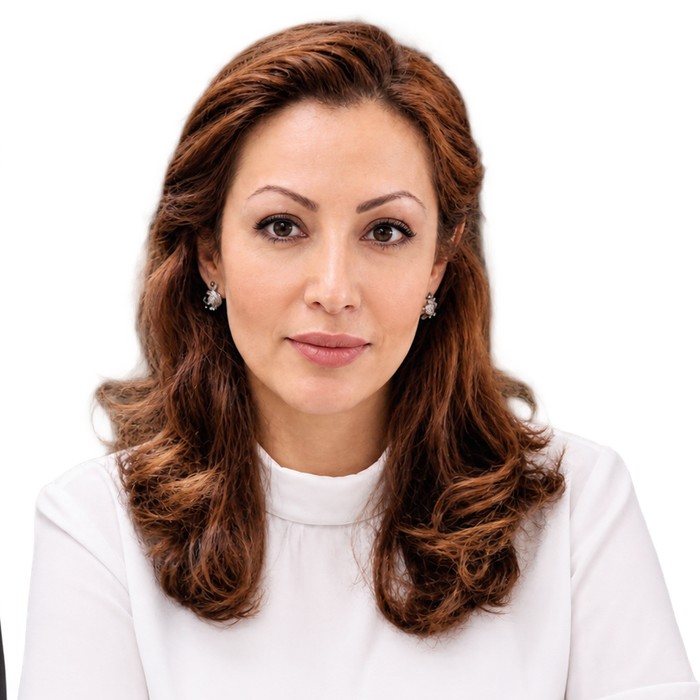

Razieh Dinarvand

Razieh Dinarvand

Vice President

Razieh Dinarvand is an Iranian Canadian immigration professional whose career has moved between science, law, and immigration work, each step adding to her ability to help people navigate Canada’s immigration and settlement system.

She’s a Regulated Canadian Immigration Consultant (RCIC) with deep experience in refugee cases and immigration appeals, and she’s taken on significant pro bono work for people who couldn’t otherwise afford professional help. Before any of that, she earned a degree in Microbiology in Iran and worked as a medical laboratory technologist in Tehran, then retrained in Canada through studies in Food Industrial Technology.

It’s an unusual combination, science, law, and immigration work, and it gives her a sharp analytical eye alongside real cross-cultural perspective. Having built a career across two countries and several disciplines, she brings exactly the kind of international, ground-level understanding Limina’s communities need.

Abbas Bukhari

Abbas Bukhari

Board Member, Technology & Operations

Abbas Bukhari is a Pakistani Canadian technology professional who has spent years working inside major organizations like IBM, Microsoft, TD, Bell, and Rogers. His background is in technical infrastructure, systems, and operations, the kind of work where reliability and security aren’t optional.

He holds a Master’s degree in Computer Science and puts that experience to work at Limina directly, running the organization’s technical infrastructure and operations, everything from the website to the digital systems its programs depend on.

His Pakistani Canadian background and years in enterprise technology round out Limina’s leadership with a different kind of perspective, one more voice from a different discipline, all working toward the same communities the organization was built to serve.

Name & Meaning

LIMINA comes from the Latin word limen: a threshold, a doorway, a point of transition. We chose it because that’s exactly where real change tends to start, the moment someone finds safety, support, or just the confidence to take the next step.

Where We Began

Built from the ground up

Limina grew out of years spent working directly with women, newcomers, refugees, and families going through difficult transitions.

Through this work, we saw how often challenges overlap. Violence can lead to housing instability. Financial dependence can make it harder to leave an unsafe situation. Newcomers may face language, cultural, social, and systemic barriers while trying to rebuild their lives.

Limina exists to help close those gaps, with practical guidance, survivor support, community connections, education, and referrals to the right professional help, so people can move forward with more clarity and build something more stable.

What started as grassroots community work has grown into a federally incorporated Canadian nonprofit, still doing the same job: helping people move from crisis toward safety, stability, and opportunity.

Why This Work Matters

Social challenges rarely show up alone. Housing insecurity adds to financial stress. Financial dependence makes it harder to leave an unsafe relationship. Newcomers often face language, cultural, and institutional barriers all at once. Limina works at the community level to connect people with practical support before these challenges compound.

Our belief is simple: people deserve more than survival. They deserve the opportunity to rebuild, participate, earn, belong, and live with dignity.

Mission

Limina exists to help people and strengthen communities, creating real paths to safety, dignity, economic opportunity, housing stability, and belonging.

We focus mainly on women and girls, newcomers, refugees, survivors of domestic and intimate-partner violence, and anyone facing financial, housing, or social barriers. Give people access to safety, stability, and the knowledge to navigate available resources, and they’re in a much better position to rebuild and give back to their own communities.

Vision

We want to see communities where everyone can live with safety, dignity, and a real sense of belonging, no matter their gender, background, immigration history, or what they’ve been through.

That means women and girls free to build independent lives. Newcomers and refugees welcomed with dignity. Survivors supported, not silenced. Support that leads somewhere long-term, not just a response to a crisis.

Our Community Philosophy

Community is not simply a place. It is a relationship.

Communities get stronger when people are seen, heard, and given a real chance to contribute. Everyone carries knowledge, skill, and potential worth recognizing. Our job is to create spaces where that can actually happen.

We don’t define people by what they’ve been through. We see the person beyond the crisis, and we help build the conditions for them to move forward.